After all these years, Phil continues to put together great teams that work together and are very clear on the mission at hand. The tech team is there to help with any problem that may arise. And sales and service consistently do a terrific job.

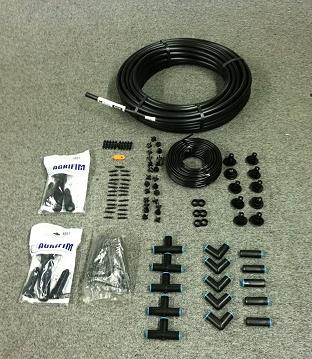
Each kit can be made to order but the attachment below will show you what is typical.
| Attachment | Size |
|---|---|
| universal-conversion-kit.pdf | 517.22 KB |
| drip-irrigation-conv-kit.pdf | 302.61 KB |
April 1st 2015 Wyatt will be launching a water conservation movement called the
Our Goal is to help people conserve water, track the data and reach 1,000,000 of savings this growing season. How will we do it?
So how do you benefit?
How do I get Started?
Current Offers
What is in a typical kit?
How can I get involved to help in my community?

Would you like a personalized conservation plan? We can help get you started on the right track. Contact Kris to make an appointment. Kris [at] wyattsupply [dot] com
I have questions or ideas on how I can help, who should I contact?
| Attachment | Size |
|---|---|
| drip_conversion_kit.jpg | 32.07 KB |
Water Conservation
New and existing Landscapes
A Become familiar with the Irrigation system components and how they work.
B Know how to program and adjust your irrigation controller, keep owners manual handy for easy access
4. Maintain your system
A Watch for changes in your landscape, as plants grow components may need to be adjusted or changed
B If an area receives more shade because of tree growth you may need to adjust your irrigation cycle to compensate for less water needs
C Keep grass and shrubs trimmed to proper height to insure adequate irrigation coverage
5. Evaluate your system
A Retrofit and update an existing Irrigation System
A Check for leaks
B Look and listen for problem areas while your irrigation system is running
C Get familiar with your irrigation components and know how to make adjustments
6. Repair, Adjust
A Visit your local Irrigation supplier and get advice on how to update and evaluate your system. Numerous products are available to update existing systems to bring them up to date and Water Conservative.
B Contact your local Water Conservation Office for advice and guidance.
C Separate zones that contain plant material with incompatible watering needs Replace an outdated Irrigation Timer with a newer model that has a water budgeting feature. Set for 100% in hotter months then adjust the amount of water by percentage instead of reprogramming each zone individually.
D Install a rain sensor to shut off irrigation system when detectable rainfall occurs
E Install a wind sensor in windy regions when wind velocity is too great to run an efficient cycle
F Install a flow sensor to shut off irrigation system when a system breakage occurs and causes a high flow situation
G Install check valves to avoid runoff from low-lying sprinkler heads
H Install Pressure regulators or Pressure regulated sprinklers to maintain proper system
pressure and flow rate

cityofpetaluma.net/wrcd/mulch-madness-program.html

ci.santa-rosa.ca.us/doclib/Documents/greenexchangeInfoandfaqfinal.pdf
There are many things to consider when sizing wire: voltage coming out of the controller, the solenoid draw, how many valves you're trying to operate, quality of your wire splices, etc. For a rough rule of thumb, 18-gauge is good for 750 feet, if you are operating one valve at a time.
Filters can help extend the life of, and lower the maintenance on your sprinkler system. For drip systems, filters are a necessity to prevent emitters from plugging. Even if small sand particles pass through your system without clogging it, they still can cause wear on the equipment.
There are a number of things that affect transformer and wire sizing: the number of fixtures, length of wire needed, and the bulb wattage in each fixture. We can help you calculate which transformer and wire size would be best for you.
No! Any time a ceiling sprinkler or escutcheon is painted, the temperature required to activate the sprinkler is no longer accurate.
Yes, a backflow prevention device that has been approved bt the Uniform Plumbing Code (UPC) is required for all irrigation systems.
There are several types of glue, each with its own application:
Both 2711 and 2705 require the use of primer.
All the products we carry are a commercial grade with manufacturers' warranties. PVC comes in several grades, and most of these products in the retail stores are made with the lesser grade material.
It's not recommended, because the watering requirements are very different for your drip system versus your sprinkler system.
No, a fire system is calculated for specific flow requirements, which would be altered if other functions came off the same lines. This would substantially decrease the effectiveness of the fire protection application.
A pressure change or surge in the line causes water hammer, generally when water is turned on or off. If you are having a problem with water hammer in your line, adding a short branch line with a garden hose may help.
The easiest solution is to lower the water pressure for your entire irrigation system. This doesn't really get rid of all of the water hammer, but it will sometimes reduce it to a level you can live with. The next step is to try a water hammer arrestor. Try putting it on a hose bib close to the point where the irrigation system connects to the house water. If you have a hose bib on the irrigation system mainline, that is an even better spot to place the arrestor.
Your auto filter should only flush when the filter element is plugged. If it flushes continuously, the filter needs maintenance or repair.
PC drippers are mainly used on systems with a long run of drip tubing, in order to maximize the amount of drippers on a single drip line while maintaining an even flow rate from each dripper. They are also better suited for areas with elevation differences.
Additional recommended mounting locations include:
We carry a product that will help clean out plugged emitters and, if injected into your system regularly, will keep them flowing.
There's no fixed answer. Consider your budget, water quality, and availability of the filter and parts. Screen filters are generally the least expensive. If you have a city water supply with nothing more than a periodic grain of sand or flake of rust in it, a screen filter will be fine in most cases.
Disk filters are good at removing particulates, like sand, and organic matter. A disk filter consists of a stack of round disks. The face of each disk is covered with various sized small bumps, and each bump has a sharp point on the top of it, somewhat like a tiny pyramid. The bumps create tiny spaces between the discs when they're stacked together. The water is forced between the disks, and the particulates are filtered out because they won't fit through these gaps. The sharp points on the bumps snag the organics. For automatic cleaning of the filter, the disks separate from each other, freeing the debris, which flushes out through a flush outlet. With less expensive disk filters, you must remove the disks and hose them off.
Yes, we sell to and can offer expert advice to both the contractor and do-it yourselfer.
Try turning the valve on manually by turning the bleed screw or solenoid. If it still won't activate, make sure the main water supply is turned on.
It could be the lowest head on the lateral line. If so, all the water left over in the pipe after irrigation is draining through this sprinkler. Fix the problem with a check valve placed underneath the sprinkler.
We don’t do any in field work. We would recommend a licensed contractor to help you with troubleshooting.
There are a variety of moisture probes and sensors available, depending on your application.
You need to have 110v power available where you wish to install your main controller. From there you run a low voltage wire out to your individual valves. If 110v is not available, there are battery- operated valves that will do the job. If you have existing manual valves, you’ll need to either replace them or add an electric valve adapter.
Yes we can GPS the field before staking.
Yes, we’ll come out to your project and use a GPS to get the exact measurements, then provide you with a detailed CAD design and list of materials.
You need to have 110v power available where you wish to install your main controller. From there you run a low voltage wire out to your individual valves. If 110v is not available, there are battery- operated valves that will do the job. If you have existing manual valves, you’ll need to either replace them or add an electric valve adapter.
Yes we can GPS the field before staking.
After all these years, Phil continues to put together great teams that work together and are very clear on the mission at hand. The tech team is there to help with any problem that may arise. And sales and service consistently do a terrific job.
Sign up below to receive our latest news and best deals. Unsubscribe at any time.